
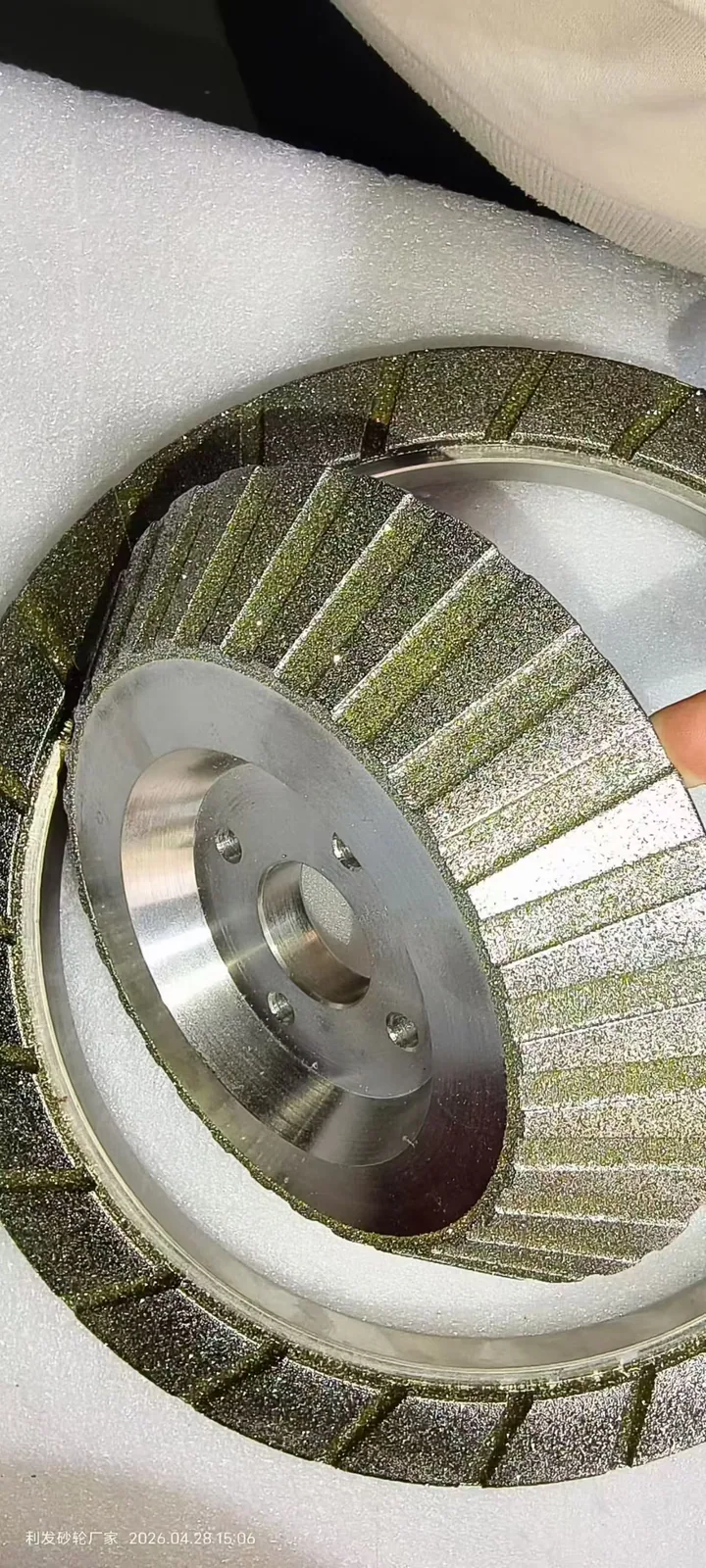
Why wheel selection matters in glass processing
Glass edge grinding is sensitive to chipping, heat, wheel wear, and profile consistency. A wheel that looks similar on paper can behave very differently on a straight-line edger, beveling machine, CNC center, or manual edge station. Buyers usually need to balance edge finish, production speed, and wheel life before placing trial or bulk orders.
If your application is mainly glass edging and shaping, start with our glass grinding application page and glass material guide.
Choose diamond abrasive for glass
Diamond grinding wheels are the normal choice for float glass, tempered glass, laminated glass, furniture glass, and architectural glass processing. Conventional abrasives wear too quickly on hard brittle glass and often make quality control harder.
For most buyers, the first decision is not whether to use diamond, but which bond, grit, profile, and machine-compatible dimension will fit the process best. Our diamond grinding wheels and metal bond grinding wheels cover the most common industrial glass applications.
Match the bond to the grinding stage
Metal bond for shaping and production life
Metal bond diamond wheels are often used where wheel life, profile holding, and stable edge geometry matter most. They are common for continuous production lines and rougher glass edge shaping steps.
Typical reasons buyers choose metal bond:
- longer service life in repetitive production
- stronger diamond retention
- stable wheel profile for edge forming
- better fit for wet grinding lines
Resin bond for smoother finishing
Resin bond wheels are often selected for finishing or refinement steps where a smoother edge and more forgiving cut are important. They may not last as long as metal bond in heavy shaping, but they can help improve finish quality after rough grinding.
If your line needs both stock removal and edge quality, it is common to use more than one wheel specification in sequence.
Choose grit according to edge quality target
Coarser grits usually remove stock faster but can leave a rougher edge. Finer grits usually improve finish but may reduce removal rate. Buyers should match grit to the actual processing step instead of asking for one universal wheel.
In quotation requests, it helps to clarify whether the wheel is for:
- rough edge shaping
- semi-finishing
- fine finishing
- beveling
- arrising
- seaming before tempering or laminating
Confirm wheel profile and machine details
Machine compatibility is one of the biggest causes of order delays. Before requesting a quote, confirm the following:
- wheel diameter
- wheel thickness or rim width
- arbor hole size
- wheel profile or edge shape
- machine brand and model
- spindle speed or process description
- wet or dry grinding
If you already have a drawing, used sample, or wheel photo, include it. That usually shortens the technical discussion and reduces specification errors.
Consider the glass type and production volume
Different glass jobs do not always need the same wheel setup. Buyers should mention whether the process involves:
- float glass
- tempered glass
- laminated glass
- mirror glass
- furniture glass
- architectural or shower glass
Production volume also matters. Trial orders, maintenance purchases, and high-volume factory supply often need different priorities for cost per piece, edge consistency, and replacement frequency.
Quality signals industrial buyers should check
Before moving forward with a supplier, ask practical questions instead of only comparing unit price:
- Can the supplier recommend a specification based on your machine and edge process?
- Can they support sample or trial orders before bulk production?
- Can they customize profile, grit, rim width, and arbor hole?
- Can they provide neutral or private label packaging if needed?
- Can they discuss expected application fit instead of sending a generic catalog answer?
For OEM or distributor buyers, the ability to communicate clearly on wheel dimensions and application details often matters as much as the wheel itself.
What to include in your RFQ
To get a faster and more accurate quotation, send:
- glass type
- edge grinding or beveling application
- machine model
- wheel diameter
- rim width or thickness
- arbor hole
- grit size if known
- bond preference if known
- photos, drawing, or existing sample
- trial quantity and forecast bulk quantity
If you are comparing options for a new line or replacement sourcing, you can also request both diamond grinding wheels and metal bond grinding wheels for evaluation.
Final recommendation
For most glass edge grinding jobs, diamond abrasive is the right starting point. Then choose metal bond or resin bond based on whether your priority is wheel life, shaping stability, or finishing quality. The best wheel is the one matched to your machine, glass type, edge shape, and production goal.
If you need a recommendation, send your wheel dimensions, machine details, glass application, and quantity through the request quote page. Trial orders and custom specifications are available for industrial buyers.
Ready to move from research to quotation?
If this guide is close to your application, send your wheel size, workpiece material, current grinding issue and expected quantity. We can help confirm the specification before trial or bulk purchase.
Useful buyer details
- - Wheel diameter, thickness and arbor hole
- - Workpiece material and machine model
- - Grit, bond or current wheel problem
- - Trial quantity or repeat order estimate
FAQ
What abrasive is normally used for glass edge grinding?
Diamond abrasive is the standard choice for glass because it cuts hard brittle material efficiently and supports stable edge quality.
Should I use resin bond or metal bond for glass?
Metal bond wheels are commonly used for longer life and production edge grinding, while resin bond wheels are often selected for smoother finishing steps.
What information should I send for a glass wheel quotation?
Send the glass type, machine model, wheel diameter, rim width, grit size, edge shape, wet or dry process, and expected order quantity.